Categorias
Cinema Cultura Latina Entretenimento Notícias Sem categoria Teatro

Oscar 2025: com Ainda Estou Aqui, Academia divulga pré-selecionados

Indicações definitivas serão divulgadas em 17 de janeiro; confira a lista

Nesta terça (17), a Academia anunciou a lista de finalistas em dez categorias para o Oscar 2025. O longa Ainda Estou Aqui (2024), de Walter Salles, está entre os pré-selecionados para a categoria Filme Internacional, e disputará uma indicação para concorrer à 97ª cerimônia do Oscar com outras 14 obras estrangeiras.

A presença do longa brasileiro entre os pré-selecionados marca a primeira vez que um filme nacional avança na votação desde 2007, quando O Ano em que Meus Pais Saíram de Férias (2006), de Cao Hamburger, foi pré-indicado para concorrer ao Oscar 2008. Porém, o filme não conseguiu uma indicação e ficou de fora da 80ª premiação.

Emilia Pérez (2024) é o filme com mais pré-indicações, somando cinco. Em seguida, o musical Wicked (2024) está pré-selecionado em quatro categorias, enquanto Gladiador II (2024) conta com três.

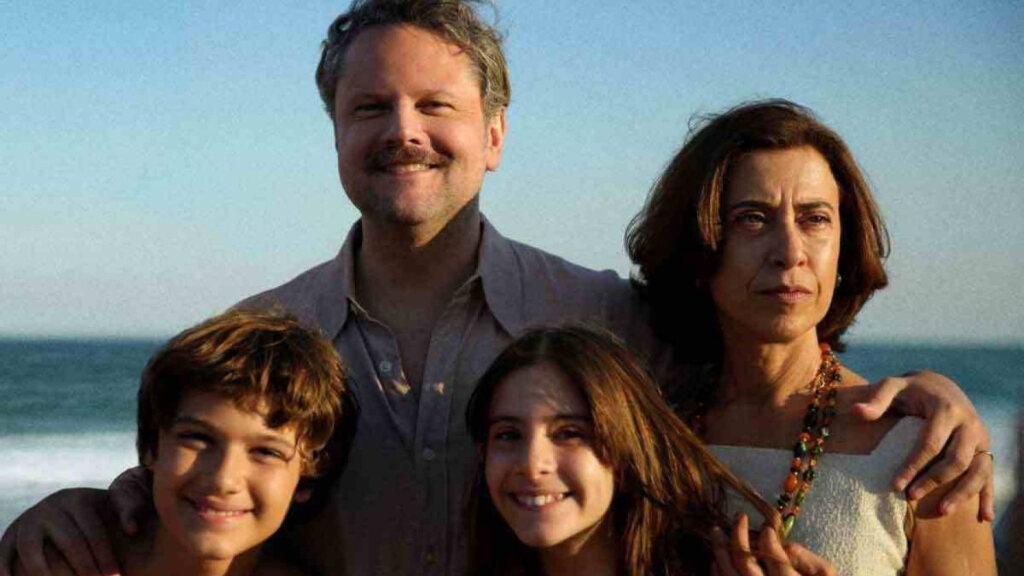
emilia perez, um dos pre-selecionados oscar 2025
Foto: reprodução/Netflix
Confira as listas completas dos pré-selecionados ao Oscar 2025, por categorias:

Melhor Longa-metragem Internacional

  • Ainda Estou Aqui (Brasil)
  • Universal Language (Canadá)
  • Waves (República Tcheca)
  • The Girl with the Needle (Dinamarca)
  • Emilia Pérez (França)
  • The Seed of the Sacred Fig (Alemanha)
  • Touch (Islândia)
  • Kneecap (Irlanda)
  • Vermiglio (Itália)
  • Flow (Letônia)
  • Armand (Noruega)
  • From Ground Zero (Palestina)
  • Dahomey (Senegal)
  • How to Make Millions before Grandma Dies (Tailândia)
  • Santosh (Reino Unido)

Melhor Trilha Sonora

  • Alien: Romulus
  • Babygirl
  • Beetlejuice Beetlejuice: Os Fantasmas Ainda se Divertem
  • Pisque Duas Vezes
  • Blitz
  • O Brutalista
  • Rivais
  • Conclave
  • Emilia Pérez
  • The Fire Inside
  • Gladiador II
  • Horizon: An American Saga Chapter 1
  • Divertida Mente 2
  • Nosferatu
  • O Quarto ao Lado
  • Sing Sing
  • The Six Triple Eight
  • Wicked
  • Robô Selvagem
  • Young Woman and the Sea

Melhor Som

  • Alien: Romulus
  • Blitz
  • Um Completo Desconhecido
  • Deadpool & Wolverine
  • Dune: Parte Dois
  • Emilia Pérez
  • Gladiador II
  • Coringa: Folia a Dois
  • Wicked
  • Robô Selvagem

Melhor Canção Original

  • Forbidden Road de Better Man
  • Winter Coat de Blitz
  • Compress/Repress de Rivais
  • Never Too Late de Elton John: Never Too Late
  • El Mal de Emilia Pérez
  • Mi Camino de Emilia Pérez
  • Sick In The Head de Kneecap
  • Além de Moana 2
  • Tell Me It’s You de Mufasa: O Rei Leão
  • Piece By Piece de Piece by Piece
  • Like A Bird de Sing Sing
  • The Journey de The Six Triple Eight
  • Out Of Oklahoma de Twisters
  • Kiss The Sky de Robô Selvagem
  • Harper And Will Go West de Will & Harper

Melhor Curta-metragem de Animação

  • Au Revoir Mon Monde
  • A Bear Named Wojtek
  • Beautiful Men
  • Bottle George
  • A Crab in the Pool
  • In the Shadow of the Cypress
  • Magic Candies
  • Maybe Elephants
  • Me
  • Origami
  • Percebes
  • The 21
  • Wander to Wonder
  • The Wild-Tempered Cravier
  • Yuck!

Melhor Curta-metragem em Live-Action

  • Anuja
  • Clodagh
  • The Compatriot
  • Crust
  • Dovecote
  • Edge of Space
  • The Ice Cream Man
  • I’m Not a Robot
  • The Last Ranger
  • A Lien
  • The Man Who Could Not Remain Silent
  • The Masterpiece
  • An Orange from Jaffa
  • Paris 70
  • Room Taken

Melhor Maquiagem e Penteado

Melhor Documentário

  • The Bibi Files
  • Black Box Diaries
  • Dahomey
  • Daughters
  • Eno
  • Frida
  • Hollywoodgate
  • No Other Land
  • Porcelain War
  • Queendom
  • The Remarkable Life of Ibelin
  • Soundtrack to a Coup d’Etat
  • Sugarcane
  • Union
  • Will & Harper

Melhor Documentário de Curta-metragem

  • Chasing Roo
  • Death by Numbers
  • Eternal Father
  • I Am Ready, Warden
  • Incident
  • Instruments of a Beating Heart
  • Keeper
  • Makayla’s Voice: A Letter to the World
  • Once upon a Time in Ukraine
  • The Only Girl in the Orchestra
  • Planetwalker
  • The Quilters
  • Seat 31: Zooey Zephyr
  • A Swim Lesson
  • Until He’s Back

Melhores Efeitos Visuais

  • Alien: Romulus
  • Better Man
  • Guerra Civil
  • Deadpool & Wolverine
  • Dune: Part Dois
  • Gladiador II
  • Planeta dos Macacos: O Reinado
  • Mufasa: O Rei Leão
  • Twisters
  • Wicked

E aí, com quais pré-indicações você mais ficou surpresa? Então conta pra gente nas redes sociais do Entretê (Instagram, X e Facebook) e nos siga para ficar por dentro de tudo o que rola no mundo do entretenimento.

Leia também: Academia Brasileira de Cinema abre inscrições para o Prêmio Grande Otelo 2025

Texto revisado por Kalylle Isse


Categorias
Cultura Latina Entretenimento Notícias Séries Teatro

Com Carinho, Kitty: Noah Centineo volta como Peter Kavinsky em trailer da 2ª temporada

Os novos episódios estarão disponíveis no streaming em janeiro de 2025

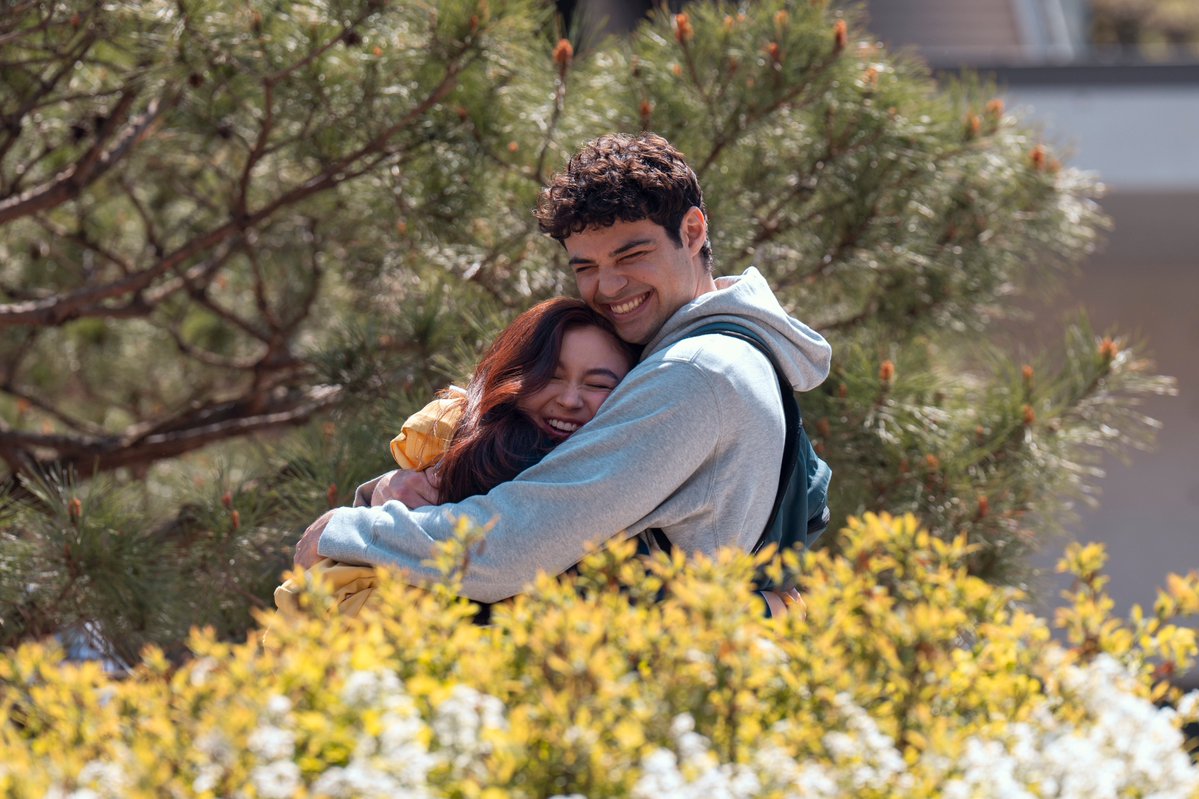
O trailer da segunda temporada de Com Carinho, Kitty, série spin-off da trilogia de filmes baseados nos livros Para Todos os Garotos que Já Amei, da autora Jenny Han, foi divulgado nesta terça (17). Estrelado por Anna Cathcart, a série retorna ao streaming em 16 de janeiro de 2025, e conta com uma participação especial de Noah Centineo, reprisando seu papel como Peter Kavinsky.

A nova temporada marca o retorno de Kitty (Anna Cathcart) na KISS, após enfrentar vários problemas amorosos e acadêmicos no ano anterior. Dessa vez, ela decide que precisa focar mais em descobrir sobre a história de sua mãe e resolver algumas questões pendentes sobre a sua vida amorosa. E não tem ninguém melhor para ajudar nisso do que o próprio Peter Kavinsky (Noah Centineo). 

Confira o trailer divulgado pela Netflix:


Além do retorno de Noah Centineo como Peter, a série conta com novos personagens no elenco, como Audrey Huynh, Sasha Bhasin e Joshua Lee. Também no elenco principal temos Minyeong Choi, Gia Kim, Sang Heon-lee, Anthony Keyvan, Regan Aliyah e Jocelyn Shelfo.


Ansiosos para ver em que confusões a Kitty vai se meter nesta temporada? Contem para a gente! E nos sigam nas redes sociais do Entretetizei — Facebook, Instagram e X — para mais novidades sobre suas séries preferidas.

Leia também: O Privilégio de Amar: novela mexicana estreia no streaming

Texto revisado por Bells Pontes

Categorias
Cinema Notícias Sem categoria

Karatê Kid: Lendas ganha primeiro trailer

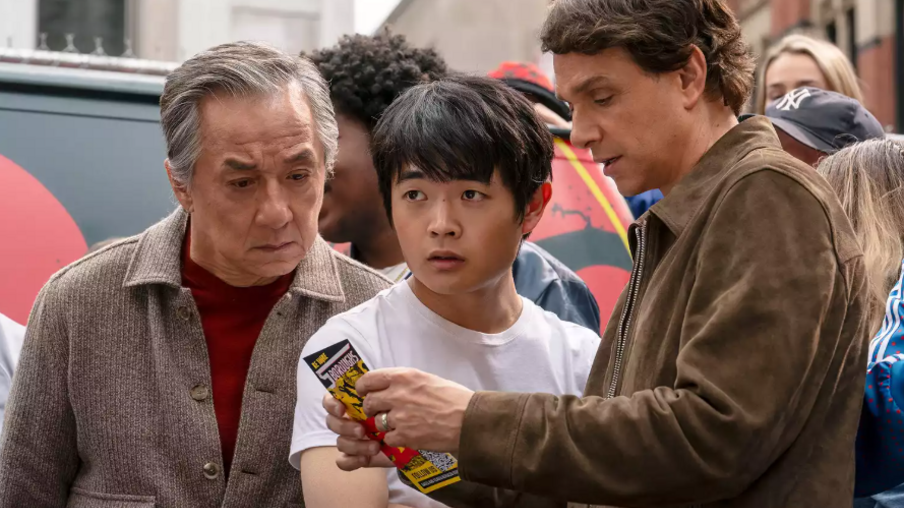
O filme traz Jackie Chan e o Karatê Kid original, Daniel LaRusso (Ralph Macchio)

Bateu a nostalgia! Se você também é fã da franquia de Karatê Kid, saiba que uma expansão dos filmes originais que conquistaram gerações acaba de ganhar o primeiro trailer, intitulado Karatê Kid: Lendas. O longa conta a história de Li Fong, interpretado por Ben Wang que, ao deixar Beijing para viver em Nova York, se depara com diversos desafios em relação à nova cultura e à adaptação a um mundo desconhecido.

Neste filme, depois de uma tragédia familiar, o prodígio do kung fu Li Fong (Ben Wang) é forçado a sair de sua casa em Beijing para morar em Nova York com sua mãe. Li sofre para superar o passado, enquanto tenta se encaixar na nova escola e, apesar de não querer lutar, os problemas parecem que o encontram em todos os lugares.

Quando um novo amigo precisa de ajuda, Li entra em uma competição de caratê – mas só suas habilidades não bastam. O professor de kung fu de Li, Sr. Han (Jackie Chan), recruta o Karatê Kid original, Daniel LaRusso (Ralph Macchio), para ajudar, e Li aprende uma nova maneira de lutar, unindo os dois estilos em um só para um show definitivo de artes marciais.

Segura a ansiedade, porque o filme ainda não tem data definida no Brasil, mas a aventura é dirigida por Jonathan Entwistle, conhecido por suas produções em The End of the F***ing World (2017) e I Am Not Okay with This (2020). 


Gostou da novidade? Siga as redes sociais do EntretetizeiInstagram, Facebook e X – e fique por dentro de mais conteúdos sobre o mundo do entretenimento e da cultura.

Leia também: Confira as novas produções que chegam em janeiro no streaming


Texto revisado por Larissa Suellen

Categorias
Cultura asiática Notícias Séries

5 dramas tailandeses essenciais para assistir se você é novo no universo BL

Não dá para falar de BL sem mencionar algumas dessas séries tailandesas

Os fãs veteranos de BL asiático sabem que os BLs tailandeses, provavelmente, são os pioneiros definitivos do gênero e desempenharam um papel enorme no sucesso do BL como o conhecemos hoje. Novos BLs tailandeses são lançados quase todo mês, o que torna acompanhar as novidades um desafio divertido.

Para facilitar, especialmente para quem está começando no universo dos BLs tailandeses, aqui estão alguns pilares modernos que já se tornaram assistências indispensáveis:

Até nos Encontrarmos Novamente (2021)

Um fio vermelho do destino conecta dois aparente desconhecidos em Até nos Encontrarmos Novamente: um adorável calouro universitário chamado Pharm (Fluke Natouch Siripongthon) e um sério veterano, Dean (Ohm Thitiwat Ritpraser). Desde a primeira vez que se encontram, há uma conexão misteriosa, mas inegável, entre eles, e o destino continua colocando-os frente a frente. Conforme se conhecem melhor, descobrem que sua história remonta a dois estudantes do passado que se apaixonaram quase três décadas antes.  

Até nos Encontrarmos Novamente é uma história sobre reencarnação e, acima de tudo, uma segunda chance para o amor.

BL
Foto: reprodução/Amino

Por que é um clássico?

Essa série pega o ambiente universitário tailandês familiar e adiciona um toque superinteressante. Há algo irresistível em histórias de amor traçadas pelo destino. De alguma forma, esse drama combina, perfeitamente, uma trágica história de amor do passado com uma adorável história de amor no presente. Os grupos de amigos divertidos dos protagonistas também são um grande destaque, além de contar com romances secundários que são tão bons quanto a trama principal.

Estrela na Minha Cabeça (2022)

Em Estrela na Minha Cabeça, uma situação complicada surge quando Daonuea (Dunk Natachai Boonprasert) volta de seus estudos no exterior e descobre que seu crush do colégio, Khabkluen (Joong Archen Aydin), está na mesma universidade. Após ter feito uma confissão de amor rejeitada para Khabkluen, antes de partir, Daonuea tenta manter a pose fingindo que não o conhece.

Mas isso não dá muito certo, já que eles acabam dividindo o mesmo quarto no dormitório, com apenas alguns passos separando seus beliches. Agora, convivendo tão de perto, eles são obrigados a lidar com a evidente química entre eles e a relação incerta que compartilham.

BL
Foto: reprodução/Amino

Por que é um clássico?

À primeira vista, essa é uma história de amor simples sobre dois universitários que precisam superar alguns mal-entendidos para reconhecer seus verdadeiros sentimentos, mas este drama é uma experiência de assistir extremamente agradável.

O vai e vem entre Daonuea e Khabkluen mantém você voltando e há, literalmente, momentos de tirar o fôlego em cada episódio. Você vai se identificar com a confusão e as borboletas no estômago de Daonuea, enquanto ele tenta resistir ao charme natural de seu crush, acreditando que não tem chance com ele. Como um jovem honesto, desajeitado e fofo, Daonuea é daqueles personagens pelos quais você realmente ficaria disposto a lutar.

O Céu em seu Coração (2022)

O Céu em seu Coração é o drama irmão de Estrela na Minha Cabeça, focado no irmão mais velho de Daonuea, Kuafah (Mek Jirakit Thawornwong). Kuafah é um médico bem-sucedido e rico, mas seus hábitos de workaholic acabam lhe trazendo um coração partido. Quando decide ser mais despreocupado e voltar para as festas, para esquecer a dor, ele comete um erro que o obriga, junto com seus dois melhores amigos, a fazer as malas e partir para um trabalho voluntário em uma vila remota.

No seu primeiro dia na vila, Kuafah conhece Prince (Mark Jiruntanin Trairattanayon), um dedicado professor local. Eles começam com desentendimentos, mas aos poucos, vão se conhecendo além das aparências. Com a dor persistente de um término anterior e tendo dificuldades para se adaptar a um ambiente completamente diferente, Kuafah começa a desenvolver sentimentos por outro homem pela primeira vez em sua vida. Será que Prince sentirá o mesmo?

BL
Foto: reprodução/Soompi

Por que é um clássico?

Se você gostou de A Tale of a Thousand Stars (2021), este drama tem uma vibe e uma história bem semelhantes, mas é um pouco mais leve e engraçado. Assistir Kuafah se ajustar a uma mudança tão drástica de ambiente é tão engraçado quanto emocionante, e não há nada como encontrar o amor em lugares inesperados, quando se está em baixa. Se você quiser assistir na ordem cronológica, Estrela na Minha Cabeça acontece antes de O Céu em seu Coração.

Teoria do Amor (2019)

Ambientado no intrigante mundo dos estudos de cinema, o universitário Third (Gun Atthaphan Phunsawat) passa seus dias imerso em filmes com seu trio inseparável de amigos: Two (White Nawat Phumphotingam), Bone (Mike Chinnarat Siriphongchawalit) e Khai (Off Jumpol Adulkittiporn). Mas spoiler: um deles não é como os outros.

Há anos, Third também esconde um grande segredo que pode arruinar sua amizade para sempre: ele é apaixonado por seu melhor amigo, Khai. Khai, claro, é completamente alheio a isso, e essa ignorância causa muita dor a Third (momento icônico de choro no chuveiro). Third também sabe que Khai é um mulherengo, então acredita que eles nunca poderiam dar certo. No entanto, tudo começa a mudar quando seu segredo é revelado.

BL
Foto: reprodução/Soompi

Por que é um clássico?

Se você é novo no universo dos BLs tailandeses, esse é um bom drama para começar, pois apresenta o par de Off e Gun, um dos OTPs (One True Pairing) mais populares e talentosos. Ambientado no contexto dos estudos de cinema, a série também possui muitos momentos de cinematografia deslumbrante, música incrível e uma estética geral muito bonita.

Além disso, a retratação realista de um amor não correspondido é algo com o qual muitos podem se identificar. Ver Third se machucar repetidamente enquanto esconde seus sentimentos é realmente angustiante em alguns momentos. Third é mais um daqueles personagens pelos quais você torce até o último segundo.

Falei de Você ao Pôr do Sol (2020)

Finalizando esta lista com chave de ouro, Falei de Você ao Pôr do Sol é uma história de amor emocional entre dois adolescentes, Teh (Putthipong Assaratanakul) e Oh Aew (Krit Amnuaydechkorn). Os dois amigos de infância se afastam após uma briga e, embora nunca esperem se reencontrar, eles se encontram anos depois, em uma escola de língua chinesa.

Teh é designado para trabalhar com Oh Aew, e sentimentos antigos e novos começam a surgir lentamente. Inseguros sobre o que está acontecendo entre os dois, eles lutam para entender e aceitar seus sentimentos, enquanto enfrentam um ambiente que nem sempre é acolhedor para casais gays. Falei de Você ao Pôr do Sol captura os sentimentos complicados e a nostalgia do amor jovem entre dois meninos confusos sobre o que seus sentimentos realmente significam.

BL
Foto: reprodução/Soompi

Por que é um clássico? 

Falei de Você ao Pôr do Sol não é um drama que você apenas assiste, é algo que você sente e vive ao lado dos personagens. Este é, definitivamente, diferente dos BLs mais leves e fofos; ele tem um tom mais realista e sério, focando nas realidades da comunidade LGBTQ+ pela perspectiva de jovens adultos. Se você está procurando algo mais sério, com personagens complexos, questões difíceis e emoções à flor da pele, essa história de amadurecimento pode ser para você. Com apenas cinco episódios, ela realmente deixa uma impressão profunda.


Você já conhecia esses BL’s? Conte pra gente e nos siga nas redes sociais do Entretetizei — Facebook, Instagram e X — para mais novidades sobre a cultura asiática.


Texto revisado por Larissa Suellen

Categorias
Entretenimento Notícias Séries

5ª e última temporada de Sintonia estreia em 5 de fevereiro no streaming

Episódios finais da série prometem emocionar o público e marcar o legado de Nando, Rita e Doni

Hora de dizer adeus! Nesta terça (17), foi divulgado que a quinta e última temporada de Sintonia estreia em 5 de fevereiro. Os episódios da série, que retrata a periferia de São Paulo (SP), concluem as histórias dos amigos Nando (Christian Malheiros), Rita (Bruna Mascarenhas) e Doni (Jottapê) e marcam o legado do trio na quebrada.

Confira:

A nova temporada se passa quatro anos após os últimos acontecimentos: Nando, Rita e Doni enfrentam desafios intensos que podem mudar completamente o rumo de suas vidas. Enquanto Nando faz mais um corre arriscado, Rita realiza seu sonho de advogar e enfrenta um grande dilema profissional. Já Doni se surpreende com uma visita do passado, que traz novidades, e precisa tomar uma decisão crucial para os negócios da gravadora VA Records. Com novos B.Os e fortes emoções, a amizade do trio será colocada à prova pela última vez.

Em 2023, Sintonia alcançou o primeiro lugar no Top 10 Global de séries de língua não inglesa do streaming. O título possui hoje o maior número de temporadas de qualquer série original já produzida pelo streaming no Brasil, reforçando o legado e a potência da produção para o audiovisual brasileiro.

A série é baseada em uma ideia original de KondZilla e foi criada em conjunto com Felipe Braga e Guilherme Quintella. A direção geral da quinta temporada é de Johnny Araújo, e a direção dos episódios é de Johnny Araújo, Daniela Carvalho e Denis Cisma, com produção executiva de Caio Gullane e Fabiano Gullane.

Sintonia é uma produção original da Netflix e sua última temporada estreia em 5 de fevereiro de 2025.


Você está ansiose? Conta pra gente nas redes sociais do Entretê (Instagram, Facebook, X) e nos siga para ficar por dentro das novidades do entretenimento!

Leia também: Descubra o que chega ao streaming em janeiro de 2025


Texto revisado por Layanne Rezende

Categorias
Entretenimento Eventos Notícias

Universo Spanta 2025 prorroga inscrições do Voa Sabiá até 20 de dezembro

A competição é voltada para jovens talentos da música brasileira

Na última segunda (17), o Universo Spanta 2025, mais diverso festival de música brasileira do país, prorrogou as inscrições para a segunda edição do Voa Sabiá até o dia 20 de dezembro. A competição musical de âmbito nacional, que busca revelar jovens talentos da música brasileira, tem formato híbrido, presencial e digital, sendo voltada para pessoas entre 18 e 25 anos de qualquer região do país. 

Cantores(as), duplas ou bandas podem participar, bastando um celular (ou câmera) para gravar e postar um vídeo na internet como inscrição, e duas músicas autorais não comercializadas. O primeiro colocado ganha a gravação de um videoclipe, consultoria de carreira durante um ano, além de um cachê no valor de R$ 50 mil para participação do Universo Spanta 2026

“A gente ama a música brasileira, na sua diversidade, na sua regionalidade, sua potência. Misturar os públicos já é uma das nossas bandeiras, por isso nada mais natural que fazermos uma competição democrática para revelar jovens talentos, do Brasil todo, de todos os gêneros musicais. Assim podemos contribuir também com a renovação da nossa música, dando voz a quem tem o que dizer”, conta Max Viana, diretor artístico do festival que preside a comissão técnica.

As primeiras fases competitivas do Voa Sabiá acontecem no ambiente digital. Os participantes devem se inscrever e acessar o regulamento pelo link da ZIG Tickets. Em seguida, devem postar um vídeo de até dois minutos, na vertical, performando uma música de sua autoria, no seu perfil do TikTok e do Instagram, até as 23h59 do dia 15 de dezembro de 2024. O material precisa ser gravado em um estúdio ou em um ambiente fechado. 

É obrigatório marcar o perfil do @spantanenem e usar a #VOASABIA2025. A música deve ser autoral e pode estar presente em plataformas digitais de streaming de áudio, desde que postada a partir do ano de 2024 (esse link precisa, obrigatoriamente, ser informado na ficha de inscrição). Não serão admitidos videoclipes, playbacks ou gravações. A comissão técnica formada por profissionais da indústria musical e presidida pelo diretor artístico do festival, Max Viana, vai selecionar os 16 melhores vídeos que irão passar para a segunda etapa. 

Na próxima fase classificatória, os selecionados deverão postar um novo vídeo, também de até dois minutos, com uma segunda música autoral não comercializada, até as 23h59 do dia 29 de dezembro de 2024. Novamente, os vídeos devem ser postados no TikTok e no Instagram, marcando o perfil do @spantanenem e usando a hashtag #VOASABIA2025. A comissão técnica escolherá oito finalistas, que serão convidados para participar da disputa presencial durante a edição de 2025 do festival Universo Spanta, que acontece em janeiro, na Marina da Glória, no Rio de Janeiro.

A fase final do Voa Sabiá acontece ao longo do último fim de semana do Universo Spanta, com apresentações dos competidores no Palco Lapa. No dia 17 de janeiro, acontecem as quartas de final com a participação de oito competidores. No dia seguinte, 18 de janeiro, será a semifinal com quatro competidores e, no dia 19 de janeiro, acontece a grande final com a disputa entre dois competidores. O público presente ao festival poderá votar nas apresentações, apoiando seu(s) artista(s) preferido(s).


Você vai participar? Conta pra gente nas redes sociais do Entretê (Instagram, Facebook, X) e nos siga para ficar por dentro das novidades do entretenimento!

Leia também: System Of A Down anuncia turnê sul-americana para 2025


Texto revisado por Larissa Suellen

Categorias
Cinema Entretenimento Notícias

Academia Brasileira de Cinema abre inscrições para o Prêmio Grande Otelo 2025

Podem ser inscritas obras brasileiras lançadas entre maio de 2024 e abril de 2025

Já estão abertas as inscrições para a 24ª edição do Prêmio Grande Otelo, o maior prêmio do audiovisual brasileiro. As inscrições podem ser feitas até o dia 28 de fevereiro de 2025, no site da Academia Brasileira de Cinema.

Filmes e séries brasileiros lançados entre maio de 2024 e abril de 2025 podem concorrer em 30 categorias. O prêmio celebra as melhores produções e talentos do país, destacando as obras mais marcantes do último ano.

Ao todo, serão entregues 30 prêmios para longas-metragens, curtas e séries brasileiras. Desses, 29 serão selecionados por um júri composto por membros da Academia Brasileira de Cinema. O prêmio de Melhor Filme, o Grande Otelo, será escolhido pelo público, através de uma votação aberta no site da Academia.

Mais informações e o regulamento completo estão disponíveis no site oficial.


Ansiosos para saber quem serão os escolhidos? Contem pra gente! E sigam as redes sociais do Entretetizei — Instagram, Facebook, X — para mais conteúdos sobre o mundo do entretenimento.

Leia também: Prêmio Pantene 2024: confira os melhores momentos e a lista completa de vencedores 


Texto revisado por Angela Maziero Santana

Categorias
Cultura Latina Entretenimento Notícias Novelas

O Privilégio de Amar: novela mexicana estreia no streaming

O clássico da dramaturgia latina chegou ao catálogo ontem (16), repleto de drama e romance

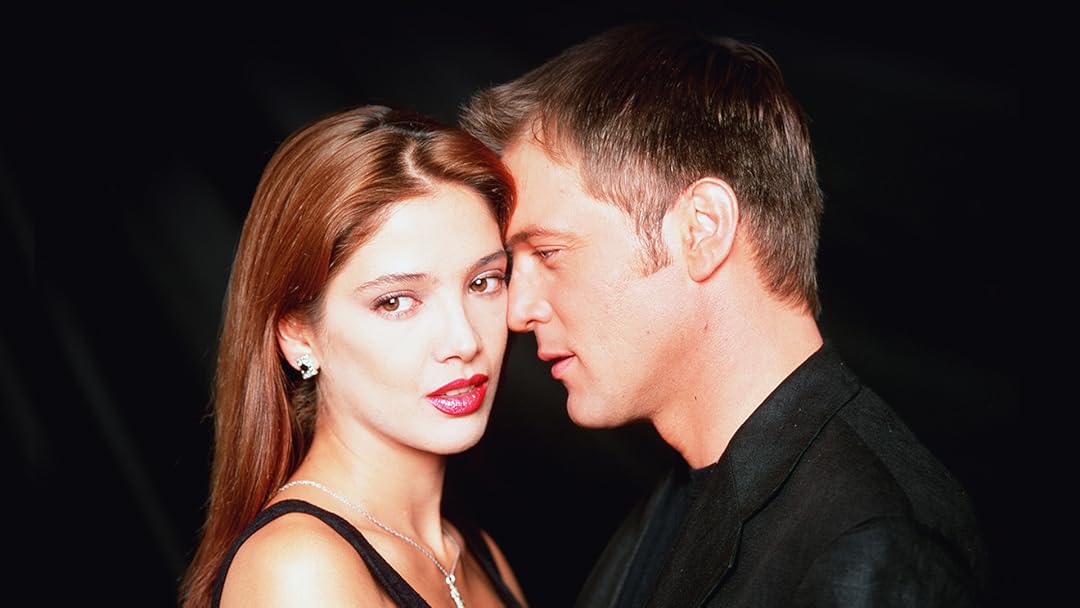
Para quem cresceu assistindo TV nos anos 90 e adora uma novela mexicana, temos uma novidade: O Privilégio de Amar (1998) chegou ao catálogo do Globoplay na última segunda (16). E os episódios serão adicionados semanalmente até as últimas semanas do próximo mês. O drama conta a história de Luciana (Helena Rojo), que engravida do seminarista Juan de la Cruz (interpretado por César Évora) e abandona sua filha na porta de uma mansão.

Abandono parental
O Privilégio de Amar
Foto: divulgação/Globoplay

A protagonista Luciana é forçada a abandonar a recém-nascida na porta de uma mansão de uma família rica, esperando que a filha seja adotada e bem-instruída. Porém, a menina é levada e educada em um convento.

Após duas décadas, Luciana subiu na vida: proprietária de uma grife e casada com Andrés (Andrés Garcia), um ator de TV. Os dois são pais de Lizbeth (Adriana Nieto), a filha rebelde e caprichosa do casal. E a jovem namora Mauricio (Rafael Mercadante), roqueiro, herdeiro e aventureiro. Víctor Manuel, interpretado pelo ator René Strickler, é meio-irmão de Lizbeth e enteado de Luciana. 

Quem é Cristina?
O Privilégio de Amar
Foto: reprodução/Duh Secco

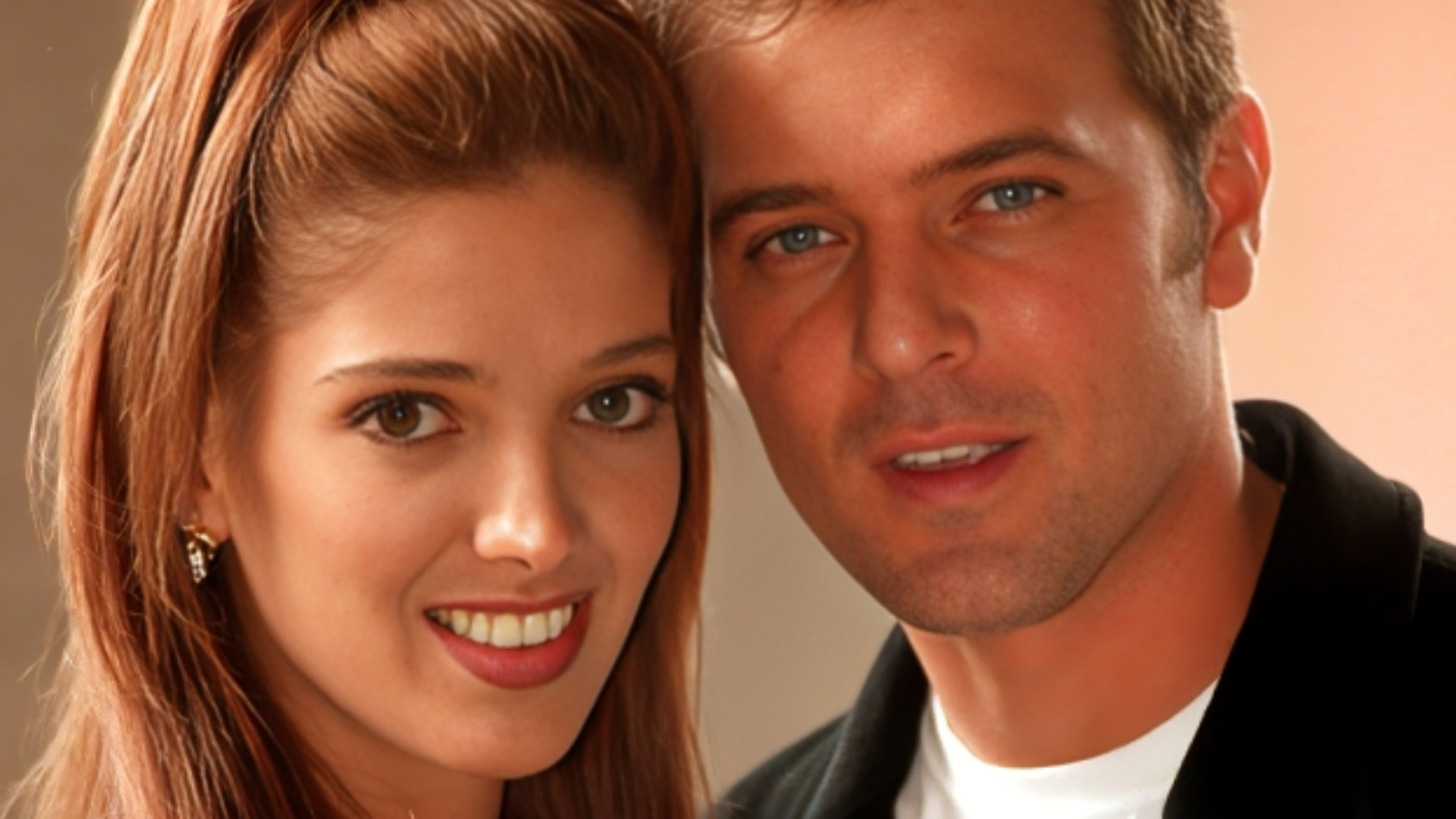
Cristina (Adela Noriega), a filha abandonada, tornou-se uma mulher cheia de beleza e bondade. Ela começa a trabalhar na grife de sua mãe biológica, sem desconfiar da verdade que as une. Após muito esforço e dedicação, consegue uma oportunidade para atuar como modelo. 

Cristina conhece Víctor Manuel e ambos se apaixonam perdidamente, mas tudo parece desmoronar para Luciana quando ela descobre a identidade de sua filha biológica. 

São 25 capítulos repletos de dramas familiares, disputa por poder e dilemas amorosos.


Você já conhecia a novela? Siga o Entretetizei nas redes sociais (Instagram, Facebook, X) para ficar por dentro de todas as novidades. 

Leia também: 8 novelas mexicanas que marcaram o início dos anos 2000


Texto revisado por Cristiane Amarante

Categorias
Sem categoria

AI Image Recognition: The Essential Technology of Computer Vision

Image Recognition: Definition, Algorithms & Uses

ai recognize image

Imaiger is easy to use and offers you a choice of filters to help you narrow down any search. There’s no need to have any technical knowledge to find the images you want. All you need is an idea of what you’re looking for so you can start your search. As you search, refine what you want using our filters and by changing your prompt to discover the best images. Consider using Imaiger for a variety of purposes, whether you want to use it as an individual or for your business. Copyright Office, people can copyright the image result they generated using AI, but they cannot copyright the images used by the computer to create the final image.

For example, if Pepsico inputs photos of their cooler doors and shelves full of product, an image recognition system would be able to identify every bottle or case of Pepsi that it recognizes. https://chat.openai.com/ This then allows the machine to learn more specifics about that object using deep learning. So it can learn and recognize that a given box contains 12 cherry-flavored Pepsis.

ai recognize image

For a machine, hundreds and thousands of examples are necessary to be properly trained to recognize objects, faces, or text characters. That’s because the task of image recognition is actually not as simple as it seems. So, if you’re looking to leverage the AI recognition technology for your business, it might be time to hire AI engineers who can develop and fine-tune these sophisticated models. Image recognition software facilitates the development and deployment of algorithms for tasks like object detection, classification, and segmentation in various industries. Fine-tuning image recognition models involves training them on diverse datasets, selecting appropriate model architectures like CNNs, and optimizing the training process for accurate results. Generative models excel at restoring and enhancing low-quality or damaged images.

Our computer vision infrastructure, Viso Suite, circumvents the need for starting from scratch and using pre-configured infrastructure. It provides popular open-source image recognition software out of the box, with over 60 of the best pre-trained models. It also provides data collection, image labeling, and deployment to edge devices. The most popular deep learning models, such as YOLO, SSD, and RCNN use convolution layers to parse a digital image or photo.

“If there is a photo of you on the Internet—and doesn’t that apply to all of us?—then you can end up in the database of Clearview and be tracked.” “These processing operations therefore are highly invasive for data subjects.” All it would require would be a series of API calls from her current dashboard to Bedrock and handling the image assets that came back from those calls. The AI task could be integrated right into the rest of her very vertical application, specifically tuned to her business. While our tool is designed to detect images from a wide range of AI models, some highly sophisticated models may produce images that are harder to detect. Our tool has a high accuracy rate, but no detection method is 100% foolproof.

Facial Recognition

The tool uses advanced algorithms to analyze the uploaded image and detect patterns, inconsistencies, or other markers that indicate it was generated by AI. In retail, photo recognition tools have transformed how customers interact with products. Shoppers can upload a picture of a desired item, and the software will identify similar products available in the store. This technology is not just convenient but also enhances customer engagement. By enabling faster and more accurate product identification, image recognition quickly identifies the product and retrieves relevant information such as pricing or availability. Meanwhile, Vecteezy, an online marketplace of photos and illustrations, implements image recognition to help users more easily find the image they are searching for — even if that image isn’t tagged with a particular word or phrase.

The larger database size and the diversity of images they offer from different viewpoints, lighting conditions, or backgrounds are essential to ensure accurate modeling of AI software. In this case, a custom model can be used to better learn the features of your data and improve performance. Alternatively, you may be working on a new application where current image recognition models do not achieve the required accuracy or performance. In image recognition, the use of Convolutional Neural Networks (CNN) is also called Deep Image Recognition.

Trained on the expansive ImageNet dataset, Inception-v3 has been thoroughly trained to identify complex visual patterns. Dutch authorities fined US facial recognition firm Clearview AI 30.5 million euros Tuesday for “illegally” creating a database with billions of photos of faces, which they called a “massive” rights breach. Drawing inspiration from brain architecture, neural networks in AI feature layered nodes that respond to inputs and generate outputs. High-frequency neural activity is vital for facilitating distant communication within the brain.

AI’s transformative impact on image recognition is undeniable, particularly for those eager to explore its potential. Integrating AI-driven image recognition into your toolkit unlocks a world of possibilities, propelling your projects to new heights of innovation and efficiency. As you embrace AI image recognition, you gain the capability to analyze, categorize, and understand images with unparalleled accuracy.

Image recognition accuracy: An unseen challenge confounding today’s AI – MIT News

Image recognition accuracy: An unseen challenge confounding today’s AI.

Posted: Fri, 15 Dec 2023 08:00:00 GMT [source]

Then, it merges the feature maps received from processing the image at the different aspect ratios to handle objects of differing sizes. With this AI model image can be processed within 125 ms depending on the hardware used and the data complexity. Given that this data is highly complex, it is translated into numerical and symbolic forms, ultimately informing decision-making processes.

We are going to try a pre-trained model and check if the model labels these classes correctly. We are also increasing the top predictions to 10 so that we have 10 predictions of what the label could be. The predictions made by the model on this image’s labels are stored in a variable called predictions. Refer to this article to compare the most popular frameworks of deep learning.

The most famous competition is probably the Image-Net Competition, in which there are 1000 different categories to detect. 2012’s winner was an algorithm developed by Alex Krizhevsky, Ilya Sutskever and Geoffrey Hinton from the University of Toronto (technical paper) which dominated the competition and won by a huge margin. This was the first time the winning approach was using a convolutional neural network, which had a great impact on the research community. Convolutional neural networks are artificial neural networks loosely modeled after the visual cortex found in animals. This technique had been around for a while, but at the time most people did not yet see its potential to be useful. Suddenly there was a lot of interest in neural networks and deep learning (deep learning is just the term used for solving machine learning problems with multi-layer neural networks).

The Hidden Business Risks of Humanizing AI

Use Magic Fill, Kapwing’s Generative Fill that extends images with relevant generated art using artificial intelligence. Magic Fill uses generative fill AI to extend the background of your images to fit a specific aspect ratio while keeping its context. Speed up your creative brainstorms and generate AI images that represent your ideas accurately. Explore 100+ video and photo editing tools to start leveling up your creative process. This announcement is about Stability AI adding three new power tools to the toolbox that is AWS Bedrock.

Generative models are particularly adept at learning the distribution of normal images within a given context. This knowledge can be leveraged to more effectively detect anomalies or outliers in visual data. This capability has far-reaching applications in fields such as quality control, security monitoring, and medical imaging, where identifying unusual patterns can be critical. In order to make a meaningful result from this data, it is necessary to extract certain features from the image.

ai recognize image

With social media being dominated by visual content, it isn’t that hard to imagine that image recognition technology has multiple applications in this area. A digital image has a matrix representation that illustrates the intensity of pixels. The information fed to the image recognition models is the location and intensity of the pixels of the image. This information helps the image recognition work by finding the patterns in the subsequent images supplied to it as a part of the learning process. The paper described the fundamental response properties of visual neurons as image recognition always starts with processing simple structures—such as easily distinguishable edges of objects.

Instead of aligning boxes around the objects, an algorithm identifies all pixels that belong to each class. Image segmentation is widely used in medical imaging to detect and label image pixels where precision is very important. Today, users share a massive amount of data through apps, social networks, and websites in the form of images. With the rise of smartphones and high-resolution cameras, the number of generated digital images and videos has skyrocketed. In fact, it’s estimated that there have been over 50B images uploaded to Instagram since its launch. For machines, image recognition is a highly complex task requiring significant processing power.

The importance of image recognition has skyrocketed in recent years due to its vast array of applications and the increasing need for automation across industries, with a projected market size of $39.87 billion by 2025. To develop accurate and efficient AI image recognition software, utilizing high-quality databases such as ImageNet, COCO, and Open Images is important. AI applications in image recognition include facial recognition, object recognition, and text detection. Recognition systems, particularly those powered by Convolutional Neural Networks (CNNs), have revolutionized the field of image recognition. These deep learning algorithms are exceptional in identifying complex patterns within an image or video, making them indispensable in modern image recognition tasks.

Get started with Cloudinary today and provide your audience with an image recognition experience that’s genuinely extraordinary. — then you can end up in the Clearview database and be tracked,” added Wolfsen. Clearview scrapes images of faces from the internet without seeking permission and sells access to a trove of billions of pictures to clients, including law enforcement agencies. As AI continues to advance, we must navigate the delicate balance between innovation and responsibility. The integration of AI with human cognition and emotion marks the beginning of a new era — one where machines not only enhance certain human abilities but also may alter others. Companies must consider how these AI-human dynamics could alter consumer behavior, potentially leading to dependency and trust that may undermine genuine human relationships and disrupt human agency.

Google to allow human characters in AI with improved imagen 3 – The Jerusalem Post

Google to allow human characters in AI with improved imagen 3.

Posted: Wed, 04 Sep 2024 15:09:39 GMT [source]

You can foun additiona information about ai customer service and artificial intelligence and NLP. Unlike humans, machines see images as raster (a combination of pixels) or vector (polygon) images. This means that machines analyze the visual content differently from humans, and so they need us to tell them exactly what is going on in the image. Convolutional neural networks (CNNs) are a good choice for such image recognition tasks since they are able to explicitly explain to the machines what they ought to see. Due to their multilayered architecture, they can detect and extract complex features from the data.

For example, the Spanish Caixabank offers customers the ability to use facial recognition technology, rather than pin codes, to withdraw cash from ATMs. With the increase in the ability to recognize computer vision, surgeons can use augmented reality in real operations. It can issue warnings, recommendations, and updates depending on what the algorithm sees in the operating system. Apart from this, even the most advanced systems can’t guarantee 100% accuracy. What if a facial recognition system confuses a random user with a criminal?

Trust me when I say that something like AWS is a vast and amazing game changer compared to building out server infrastructure on your own, especially for founders working on a startup’s budget. Moreover, the ethical and societal implications of these technologies invite us to engage in continuous dialogue and thoughtful consideration. As we advance, it’s crucial to navigate the challenges and opportunities that come with these innovations responsibly.

The Dutch Data Protection Authority (Dutch DPA) imposed a 30.5 million euro fine on US company Clearview AI on Wednesday for building an “illegal database” containing over 30 billion images of people. U.S.-based Clearview uses people’s scraped data to sell an identity-matching service to customers that can include government agencies, law enforcement and other security services. However, its clients are increasingly unlikely to hail from the EU, where use of the privacy law-breaking tech risks regulatory sanction — something which happened to a Swedish police authority back in 2021. The Dutch data protection authority began investigating Clearview AI in March 2023 after it received complaints from three individuals related to the company’s failure to comply with data access requests.

We have used TensorFlow for this task, a popular deep learning framework that is used across many fields such as NLP, computer vision, and so on. The TensorFlow library has a high-level API called Keras that makes working with neural networks easy and fun. Image recognition based on AI techniques can be a rather nerve-wracking task with all the errors you might encounter while coding. In this article, we are going to look at two simple use cases of image recognition with one of the frameworks of deep learning. Image recognition is widely used in various fields such as healthcare, security, e-commerce, and more for tasks like object detection, classification, and segmentation. Finally, generative AI plays a crucial role in creating diverse sets of synthetic images for testing and validating image recognition systems.

Computer vision (and, by extension, image recognition) is the go-to AI technology of our decade. MarketsandMarkets research indicates that the image recognition market will grow up to $53 billion in 2025, and it will keep growing. Ecommerce, the automotive industry, healthcare, and gaming are expected to be the biggest players in the years to come. Big data analytics and brand recognition Chat GPT are the major requests for AI, and this means that machines will have to learn how to better recognize people, logos, places, objects, text, and buildings. Convolutional Neural Networks (CNNs) are a specialized type of neural networks used primarily for processing structured grid data such as images. CNNs use a mathematical operation called convolution in at least one of their layers.

Take, for example, the ease with which we can tell apart a photograph of a bear from a bicycle in the blink of an eye. When machines begin to replicate this capability, they approach ever closer to what we consider true artificial intelligence. In addition to being an AI image finder, Imaiger uses the latest machine learning technologies to create images from your prompts. If you can’t find what you’re looking for, simply generate new images from the very beginning. Our tool takes your prompts and turns them into unique images that match your needs.

However, object localization does not include the classification of detected objects. Image recognition technology enables computers to pinpoint objects, individuals, landmarks, and other elements within pictures. This niche within computer vision specializes in detecting patterns and consistencies across visual data, interpreting pixel configurations in images to categorize them accordingly. Large Language Models (LLMs), such as ChatGPT and BERT, excel in pattern recognition, capturing the intricacies of human language and behavior.

The introduction of deep learning, in combination with powerful AI hardware and GPUs, enabled great breakthroughs in the field of image recognition. With deep learning, image classification, and deep neural network face recognition algorithms achieve above-human-level performance and real-time object detection. Facial recognition is used as a prime example of deep learning image recognition. By analyzing key facial features, these systems can identify individuals with high accuracy. This technology finds applications in security, personal device access, and even in customer service, where personalized experiences are created based on facial recognition.

The theta-gamma neural code ensures streamlined information transmission, akin to a postal service efficiently packaging and delivering parcels. This aligns with “neuromorphic computing,” where AI architectures mimic neural processes to achieve higher computational efficiency and lower energy consumption. Sharp wave ripples (SPW-Rs) in the brain facilitate memory consolidation by reactivating segments of waking neuronal sequences. AI models like OpenAI’s GPT-4 reveal parallels with evolutionary learning, refining responses through extensive dataset interactions, much like how organisms adapt to resonate better with their environment. Brain-Computer Interfaces (BCIs) represent the cutting edge of human-AI integration, translating thoughts into digital commands.

“Clearview should never have built the database with photos, the unique biometric codes and other information linked to them,” the AP wrote. Other GDPR violations the AP is sanctioning Clearview AI for include the salient one of building a database by collecting people’s biometric data without a valid legal basis. Prior to joining Forbes, Rob covered big data, tech, policy and ethics as a features writer for a legal trade publication and worked as freelance journalist and policy analyst covering drug pricing, Big Pharma and AI. He graduated with master’s degrees in Biological Natural Sciences and the History and Philosophy of Science from Downing College, Cambridge University. The watchdog said the U.S. company is “insufficiently transparent” and “should never have built the database” to begin with and imposed an additional “non-compliance” order of up to €5 million ($5.5 million).

To understand how image recognition works, it’s important to first define digital images. Image recognition has multiple applications in healthcare, including detecting bone fractures, brain strokes, tumors, or lung cancers by helping doctors examine medical images. The nodules vary in size and shape and become difficult to be discovered by the unassisted human eye. The algorithm then takes the test picture and compares the trained histogram values with the ones of various parts of the picture to check for close matches. Apart from CIFAR-10, there are plenty of other image datasets which are commonly used in the computer vision community.

By analyzing an image pixel by pixel, these models learn to recognize and interpret patterns within an image, leading to more accurate identification and classification of objects within an image or video. Image recognition algorithms use deep learning datasets to distinguish patterns in images. More specifically, AI identifies images with the help of a trained deep learning model, which processes image data through layers of interconnected nodes, learning to recognize patterns and features to make accurate classifications. This way, you can use AI for picture analysis by training it on a dataset consisting of a sufficient amount of professionally tagged images.

We deliver content that addresses our industry’s core challenges because we understand them deeply. We aim to provide you with relevant insights and knowledge that go beyond the surface, empowering you to overcome obstacles and achieve impactful results. Apart from the insights, tips, and expert overviews, we are committed to becoming your reliable tech partner, putting transparency, IT expertise, and Agile-driven approach first. This website is using a security service to protect itself from online attacks.

The American company says it only provides services to intelligence and investigative services outside the European Union, many of which don’t have the same level of privacy protection as the EU does. According to the Dutch DPA, this is a clear and serious violation of the General Data Protection Regulation (GDPR). The Dutch DPA launched the investigation into Clearview AI on March 6, 2023, following a series of complaints received from data subjects included in the database. Clearview AI was sent the investigative report on June 20, 2023 and was informed of the Dutch DPA’s enforcement intention.

It is recognized for accuracy and efficiency in tasks like image categorization, object recognition, and semantic image segmentation. In this regard, image recognition technology opens the door to more complex discoveries. Let’s explore the list of AI models along with other ML algorithms highlighting their capabilities and the various applications they’re being used for.

This technology empowers you to create personalized user experiences, simplify processes, and delve into uncharted realms of creativity and problem-solving. Widely used image recognition algorithms include Convolutional Neural Networks (CNNs), Region-based CNNs, You Only Look Once (YOLO), and Single Shot Detectors (SSD). Each algorithm has a unique approach, with CNNs known for their exceptional detection capabilities in various image scenarios. Image recognition identifies and categorizes objects, people, or items within an image or video, typically assigning a classification label. Object detection, on the other hand, not only identifies objects in an image but also localizes them using bounding boxes to specify their position and dimensions. Object detection is generally more complex as it involves both identification and localization of objects.

  • One of the most notable achievements of deep learning in image recognition is its ability to process and analyze complex images, such as those used in facial recognition or in autonomous vehicles.
  • This challenge becomes particularly critical in applications involving sensitive decisions, such as facial recognition for law enforcement or hiring processes.
  • The nodules vary in size and shape and become difficult to be discovered by the unassisted human eye.
  • While it’s still a relatively new technology, the power or AI Image Recognition is hard to understate.

If it is too small, the model learns very slowly and takes too long to arrive at good parameter values. Luckily TensorFlow handles all the details for us by providing a function that does exactly what we want. We compare logits, the model’s predictions, with labels_placeholder, the correct class labels.

Settings

In image recognition tasks, CNNs automatically learn to detect intricate features within an image by analyzing thousands or even millions of examples. For instance, a deep learning model trained with various dog breeds could recognize subtle distinctions between them based on fur patterns or facial structures. Creating a custom model based on a specific dataset can be a complex task, and requires high-quality data collection and image annotation. It requires a good understanding of both machine learning and computer vision.

Every AI/ML model for image recognition is trained and converged, so the training accuracy needs to be guaranteed. One can’t agree less that people are flooding ai recognize image apps, social media, and websites with a deluge of image data. For example, over 50 billion images have been uploaded to Instagram since its launch.

ai recognize image

(The process time is highly dependent on the hardware used and the data complexity). The real world also presents an array of challenges, including diverse lighting conditions, image qualities, and environmental factors that can significantly impact the performance of AI image recognition systems. While these systems may excel in controlled laboratory settings, their robustness in uncontrolled environments remains a challenge. Recognizing objects or faces in low-light situations, foggy weather, or obscured viewpoints necessitates ongoing advancements in AI technology.

We explained in detail how companies should evaluate machine learning solutions. Once a company has labelled data to use as a test data set, they can compare different solutions as we explained. In most cases, solutions that are trained using companies own data are superior to off-the-shelf pre-trained solutions.

The image is loaded and resized by tf.keras.preprocessing.image.load_img and stored in a variable called image. This image is converted into an array by tf.keras.preprocessing.image.img_to_array. We are not going to build any model but use an already-built and functioning model called MobileNetV2 available in Keras that is trained on a dataset called ImageNet. These advancements and trends underscore the transformative impact of AI image recognition across various industries, driven by continuous technological progress and increasing adoption rates. Fortunately, you don’t have to develop everything from scratch — you can use already existing platforms and frameworks. Features of this platform include image labeling, text detection, Google search, explicit content detection, and others.

Factors such as scalability, performance, and ease of use can also impact image recognition software’s overall cost and value. Additionally, social media sites use these technologies to automatically moderate images for nudity or harmful messages. Automating these crucial operations saves considerable time while reducing human error rates significantly.

It’s often best to pick a batch size that is as big as possible, while still being able to fit all variables and intermediate results into memory. TensorFlow knows different optimization techniques to translate the gradient information into actual parameter updates. Here we use a simple option called gradient descent which only looks at the model’s current state when determining the parameter updates and does not take past parameter values into account. Calculating class values for all 10 classes for multiple images in a single step via matrix multiplication.

ai recognize image

For example, to apply augmented reality, or AR, a machine must first understand all of the objects in a scene, both in terms of what they are and where they are in relation to each other. If the machine cannot adequately perceive the environment it is in, there’s no way it can apply AR on top of it. In many cases, a lot of the technology used today would not even be possible without image recognition and, by extension, computer vision. The CNN then uses what it learned from the first layer to look at slightly larger parts of the image, making note of more complex features.

  • These tools, powered by sophisticated image recognition algorithms, can accurately detect and classify various objects within an image or video.
  • We just provide some kind of general structure and give the computer the opportunity to learn from experience, similar to how we humans learn from experience too.
  • Automating these crucial operations saves considerable time while reducing human error rates significantly.
  • Image recognition, photo recognition, and picture recognition are terms that are used interchangeably.
  • In conclusion, AI image recognition has the power to revolutionize how we interact with and interpret visual media.
  • Our image generation tool will create unique images that you won’t find anywhere else.

In object recognition and image detection, the model not only identifies objects within an image but also locates them. This is particularly evident in applications like image recognition and object detection in security. The objects in the image are identified, ensuring the efficiency of these applications. Due to their unique work principle, convolutional neural networks (CNN) yield the best results with deep learning image recognition. The processes highlighted by Lawrence proved to be an excellent starting point for later research into computer-controlled 3D systems and image recognition. Machine learning low-level algorithms were developed to detect edges, corners, curves, etc., and were used as stepping stones to understanding higher-level visual data.

Image recognition is set of algorithms and techniques to label and classify the elements inside an image. Image recognition models are trained to take an input image and outputs previously classified labels that defines the image. Image recognition technology is an imitation of the techniques that animals detect and classify objects. The importance of recognizing different file types cannot be overstated when building machine learning models designed for specific applications that require accurate results based on data types saved within a database. While pre-trained models provide robust algorithms trained on millions of data points, there are many reasons why you might want to create a custom model for image recognition. For example, you may have a dataset of images that is very different from the standard datasets that current image recognition models are trained on.

Categorias
Sem categoria

AI Image Recognition: The Essential Technology of Computer Vision

Image Recognition: Definition, Algorithms & Uses

ai recognize image

Imaiger is easy to use and offers you a choice of filters to help you narrow down any search. There’s no need to have any technical knowledge to find the images you want. All you need is an idea of what you’re looking for so you can start your search. As you search, refine what you want using our filters and by changing your prompt to discover the best images. Consider using Imaiger for a variety of purposes, whether you want to use it as an individual or for your business. Copyright Office, people can copyright the image result they generated using AI, but they cannot copyright the images used by the computer to create the final image.

For example, if Pepsico inputs photos of their cooler doors and shelves full of product, an image recognition system would be able to identify every bottle or case of Pepsi that it recognizes. https://chat.openai.com/ This then allows the machine to learn more specifics about that object using deep learning. So it can learn and recognize that a given box contains 12 cherry-flavored Pepsis.

ai recognize image

For a machine, hundreds and thousands of examples are necessary to be properly trained to recognize objects, faces, or text characters. That’s because the task of image recognition is actually not as simple as it seems. So, if you’re looking to leverage the AI recognition technology for your business, it might be time to hire AI engineers who can develop and fine-tune these sophisticated models. Image recognition software facilitates the development and deployment of algorithms for tasks like object detection, classification, and segmentation in various industries. Fine-tuning image recognition models involves training them on diverse datasets, selecting appropriate model architectures like CNNs, and optimizing the training process for accurate results. Generative models excel at restoring and enhancing low-quality or damaged images.

Our computer vision infrastructure, Viso Suite, circumvents the need for starting from scratch and using pre-configured infrastructure. It provides popular open-source image recognition software out of the box, with over 60 of the best pre-trained models. It also provides data collection, image labeling, and deployment to edge devices. The most popular deep learning models, such as YOLO, SSD, and RCNN use convolution layers to parse a digital image or photo.

“If there is a photo of you on the Internet—and doesn’t that apply to all of us?—then you can end up in the database of Clearview and be tracked.” “These processing operations therefore are highly invasive for data subjects.” All it would require would be a series of API calls from her current dashboard to Bedrock and handling the image assets that came back from those calls. The AI task could be integrated right into the rest of her very vertical application, specifically tuned to her business. While our tool is designed to detect images from a wide range of AI models, some highly sophisticated models may produce images that are harder to detect. Our tool has a high accuracy rate, but no detection method is 100% foolproof.

Facial Recognition

The tool uses advanced algorithms to analyze the uploaded image and detect patterns, inconsistencies, or other markers that indicate it was generated by AI. In retail, photo recognition tools have transformed how customers interact with products. Shoppers can upload a picture of a desired item, and the software will identify similar products available in the store. This technology is not just convenient but also enhances customer engagement. By enabling faster and more accurate product identification, image recognition quickly identifies the product and retrieves relevant information such as pricing or availability. Meanwhile, Vecteezy, an online marketplace of photos and illustrations, implements image recognition to help users more easily find the image they are searching for — even if that image isn’t tagged with a particular word or phrase.

The larger database size and the diversity of images they offer from different viewpoints, lighting conditions, or backgrounds are essential to ensure accurate modeling of AI software. In this case, a custom model can be used to better learn the features of your data and improve performance. Alternatively, you may be working on a new application where current image recognition models do not achieve the required accuracy or performance. In image recognition, the use of Convolutional Neural Networks (CNN) is also called Deep Image Recognition.

Trained on the expansive ImageNet dataset, Inception-v3 has been thoroughly trained to identify complex visual patterns. Dutch authorities fined US facial recognition firm Clearview AI 30.5 million euros Tuesday for “illegally” creating a database with billions of photos of faces, which they called a “massive” rights breach. Drawing inspiration from brain architecture, neural networks in AI feature layered nodes that respond to inputs and generate outputs. High-frequency neural activity is vital for facilitating distant communication within the brain.

AI’s transformative impact on image recognition is undeniable, particularly for those eager to explore its potential. Integrating AI-driven image recognition into your toolkit unlocks a world of possibilities, propelling your projects to new heights of innovation and efficiency. As you embrace AI image recognition, you gain the capability to analyze, categorize, and understand images with unparalleled accuracy.

Image recognition accuracy: An unseen challenge confounding today’s AI – MIT News

Image recognition accuracy: An unseen challenge confounding today’s AI.

Posted: Fri, 15 Dec 2023 08:00:00 GMT [source]

Then, it merges the feature maps received from processing the image at the different aspect ratios to handle objects of differing sizes. With this AI model image can be processed within 125 ms depending on the hardware used and the data complexity. Given that this data is highly complex, it is translated into numerical and symbolic forms, ultimately informing decision-making processes.

We are going to try a pre-trained model and check if the model labels these classes correctly. We are also increasing the top predictions to 10 so that we have 10 predictions of what the label could be. The predictions made by the model on this image’s labels are stored in a variable called predictions. Refer to this article to compare the most popular frameworks of deep learning.

The most famous competition is probably the Image-Net Competition, in which there are 1000 different categories to detect. 2012’s winner was an algorithm developed by Alex Krizhevsky, Ilya Sutskever and Geoffrey Hinton from the University of Toronto (technical paper) which dominated the competition and won by a huge margin. This was the first time the winning approach was using a convolutional neural network, which had a great impact on the research community. Convolutional neural networks are artificial neural networks loosely modeled after the visual cortex found in animals. This technique had been around for a while, but at the time most people did not yet see its potential to be useful. Suddenly there was a lot of interest in neural networks and deep learning (deep learning is just the term used for solving machine learning problems with multi-layer neural networks).

The Hidden Business Risks of Humanizing AI

Use Magic Fill, Kapwing’s Generative Fill that extends images with relevant generated art using artificial intelligence. Magic Fill uses generative fill AI to extend the background of your images to fit a specific aspect ratio while keeping its context. Speed up your creative brainstorms and generate AI images that represent your ideas accurately. Explore 100+ video and photo editing tools to start leveling up your creative process. This announcement is about Stability AI adding three new power tools to the toolbox that is AWS Bedrock.

Generative models are particularly adept at learning the distribution of normal images within a given context. This knowledge can be leveraged to more effectively detect anomalies or outliers in visual data. This capability has far-reaching applications in fields such as quality control, security monitoring, and medical imaging, where identifying unusual patterns can be critical. In order to make a meaningful result from this data, it is necessary to extract certain features from the image.

ai recognize image

With social media being dominated by visual content, it isn’t that hard to imagine that image recognition technology has multiple applications in this area. A digital image has a matrix representation that illustrates the intensity of pixels. The information fed to the image recognition models is the location and intensity of the pixels of the image. This information helps the image recognition work by finding the patterns in the subsequent images supplied to it as a part of the learning process. The paper described the fundamental response properties of visual neurons as image recognition always starts with processing simple structures—such as easily distinguishable edges of objects.

Instead of aligning boxes around the objects, an algorithm identifies all pixels that belong to each class. Image segmentation is widely used in medical imaging to detect and label image pixels where precision is very important. Today, users share a massive amount of data through apps, social networks, and websites in the form of images. With the rise of smartphones and high-resolution cameras, the number of generated digital images and videos has skyrocketed. In fact, it’s estimated that there have been over 50B images uploaded to Instagram since its launch. For machines, image recognition is a highly complex task requiring significant processing power.

The importance of image recognition has skyrocketed in recent years due to its vast array of applications and the increasing need for automation across industries, with a projected market size of $39.87 billion by 2025. To develop accurate and efficient AI image recognition software, utilizing high-quality databases such as ImageNet, COCO, and Open Images is important. AI applications in image recognition include facial recognition, object recognition, and text detection. Recognition systems, particularly those powered by Convolutional Neural Networks (CNNs), have revolutionized the field of image recognition. These deep learning algorithms are exceptional in identifying complex patterns within an image or video, making them indispensable in modern image recognition tasks.

Get started with Cloudinary today and provide your audience with an image recognition experience that’s genuinely extraordinary. — then you can end up in the Clearview database and be tracked,” added Wolfsen. Clearview scrapes images of faces from the internet without seeking permission and sells access to a trove of billions of pictures to clients, including law enforcement agencies. As AI continues to advance, we must navigate the delicate balance between innovation and responsibility. The integration of AI with human cognition and emotion marks the beginning of a new era — one where machines not only enhance certain human abilities but also may alter others. Companies must consider how these AI-human dynamics could alter consumer behavior, potentially leading to dependency and trust that may undermine genuine human relationships and disrupt human agency.

Google to allow human characters in AI with improved imagen 3 – The Jerusalem Post

Google to allow human characters in AI with improved imagen 3.

Posted: Wed, 04 Sep 2024 15:09:39 GMT [source]

You can foun additiona information about ai customer service and artificial intelligence and NLP. Unlike humans, machines see images as raster (a combination of pixels) or vector (polygon) images. This means that machines analyze the visual content differently from humans, and so they need us to tell them exactly what is going on in the image. Convolutional neural networks (CNNs) are a good choice for such image recognition tasks since they are able to explicitly explain to the machines what they ought to see. Due to their multilayered architecture, they can detect and extract complex features from the data.

For example, the Spanish Caixabank offers customers the ability to use facial recognition technology, rather than pin codes, to withdraw cash from ATMs. With the increase in the ability to recognize computer vision, surgeons can use augmented reality in real operations. It can issue warnings, recommendations, and updates depending on what the algorithm sees in the operating system. Apart from this, even the most advanced systems can’t guarantee 100% accuracy. What if a facial recognition system confuses a random user with a criminal?

Trust me when I say that something like AWS is a vast and amazing game changer compared to building out server infrastructure on your own, especially for founders working on a startup’s budget. Moreover, the ethical and societal implications of these technologies invite us to engage in continuous dialogue and thoughtful consideration. As we advance, it’s crucial to navigate the challenges and opportunities that come with these innovations responsibly.

The Dutch Data Protection Authority (Dutch DPA) imposed a 30.5 million euro fine on US company Clearview AI on Wednesday for building an “illegal database” containing over 30 billion images of people. U.S.-based Clearview uses people’s scraped data to sell an identity-matching service to customers that can include government agencies, law enforcement and other security services. However, its clients are increasingly unlikely to hail from the EU, where use of the privacy law-breaking tech risks regulatory sanction — something which happened to a Swedish police authority back in 2021. The Dutch data protection authority began investigating Clearview AI in March 2023 after it received complaints from three individuals related to the company’s failure to comply with data access requests.

We have used TensorFlow for this task, a popular deep learning framework that is used across many fields such as NLP, computer vision, and so on. The TensorFlow library has a high-level API called Keras that makes working with neural networks easy and fun. Image recognition based on AI techniques can be a rather nerve-wracking task with all the errors you might encounter while coding. In this article, we are going to look at two simple use cases of image recognition with one of the frameworks of deep learning. Image recognition is widely used in various fields such as healthcare, security, e-commerce, and more for tasks like object detection, classification, and segmentation. Finally, generative AI plays a crucial role in creating diverse sets of synthetic images for testing and validating image recognition systems.

Computer vision (and, by extension, image recognition) is the go-to AI technology of our decade. MarketsandMarkets research indicates that the image recognition market will grow up to $53 billion in 2025, and it will keep growing. Ecommerce, the automotive industry, healthcare, and gaming are expected to be the biggest players in the years to come. Big data analytics and brand recognition Chat GPT are the major requests for AI, and this means that machines will have to learn how to better recognize people, logos, places, objects, text, and buildings. Convolutional Neural Networks (CNNs) are a specialized type of neural networks used primarily for processing structured grid data such as images. CNNs use a mathematical operation called convolution in at least one of their layers.

Take, for example, the ease with which we can tell apart a photograph of a bear from a bicycle in the blink of an eye. When machines begin to replicate this capability, they approach ever closer to what we consider true artificial intelligence. In addition to being an AI image finder, Imaiger uses the latest machine learning technologies to create images from your prompts. If you can’t find what you’re looking for, simply generate new images from the very beginning. Our tool takes your prompts and turns them into unique images that match your needs.

However, object localization does not include the classification of detected objects. Image recognition technology enables computers to pinpoint objects, individuals, landmarks, and other elements within pictures. This niche within computer vision specializes in detecting patterns and consistencies across visual data, interpreting pixel configurations in images to categorize them accordingly. Large Language Models (LLMs), such as ChatGPT and BERT, excel in pattern recognition, capturing the intricacies of human language and behavior.

The introduction of deep learning, in combination with powerful AI hardware and GPUs, enabled great breakthroughs in the field of image recognition. With deep learning, image classification, and deep neural network face recognition algorithms achieve above-human-level performance and real-time object detection. Facial recognition is used as a prime example of deep learning image recognition. By analyzing key facial features, these systems can identify individuals with high accuracy. This technology finds applications in security, personal device access, and even in customer service, where personalized experiences are created based on facial recognition.

The theta-gamma neural code ensures streamlined information transmission, akin to a postal service efficiently packaging and delivering parcels. This aligns with “neuromorphic computing,” where AI architectures mimic neural processes to achieve higher computational efficiency and lower energy consumption. Sharp wave ripples (SPW-Rs) in the brain facilitate memory consolidation by reactivating segments of waking neuronal sequences. AI models like OpenAI’s GPT-4 reveal parallels with evolutionary learning, refining responses through extensive dataset interactions, much like how organisms adapt to resonate better with their environment. Brain-Computer Interfaces (BCIs) represent the cutting edge of human-AI integration, translating thoughts into digital commands.

“Clearview should never have built the database with photos, the unique biometric codes and other information linked to them,” the AP wrote. Other GDPR violations the AP is sanctioning Clearview AI for include the salient one of building a database by collecting people’s biometric data without a valid legal basis. Prior to joining Forbes, Rob covered big data, tech, policy and ethics as a features writer for a legal trade publication and worked as freelance journalist and policy analyst covering drug pricing, Big Pharma and AI. He graduated with master’s degrees in Biological Natural Sciences and the History and Philosophy of Science from Downing College, Cambridge University. The watchdog said the U.S. company is “insufficiently transparent” and “should never have built the database” to begin with and imposed an additional “non-compliance” order of up to €5 million ($5.5 million).

To understand how image recognition works, it’s important to first define digital images. Image recognition has multiple applications in healthcare, including detecting bone fractures, brain strokes, tumors, or lung cancers by helping doctors examine medical images. The nodules vary in size and shape and become difficult to be discovered by the unassisted human eye. The algorithm then takes the test picture and compares the trained histogram values with the ones of various parts of the picture to check for close matches. Apart from CIFAR-10, there are plenty of other image datasets which are commonly used in the computer vision community.

By analyzing an image pixel by pixel, these models learn to recognize and interpret patterns within an image, leading to more accurate identification and classification of objects within an image or video. Image recognition algorithms use deep learning datasets to distinguish patterns in images. More specifically, AI identifies images with the help of a trained deep learning model, which processes image data through layers of interconnected nodes, learning to recognize patterns and features to make accurate classifications. This way, you can use AI for picture analysis by training it on a dataset consisting of a sufficient amount of professionally tagged images.

We deliver content that addresses our industry’s core challenges because we understand them deeply. We aim to provide you with relevant insights and knowledge that go beyond the surface, empowering you to overcome obstacles and achieve impactful results. Apart from the insights, tips, and expert overviews, we are committed to becoming your reliable tech partner, putting transparency, IT expertise, and Agile-driven approach first. This website is using a security service to protect itself from online attacks.

The American company says it only provides services to intelligence and investigative services outside the European Union, many of which don’t have the same level of privacy protection as the EU does. According to the Dutch DPA, this is a clear and serious violation of the General Data Protection Regulation (GDPR). The Dutch DPA launched the investigation into Clearview AI on March 6, 2023, following a series of complaints received from data subjects included in the database. Clearview AI was sent the investigative report on June 20, 2023 and was informed of the Dutch DPA’s enforcement intention.

It is recognized for accuracy and efficiency in tasks like image categorization, object recognition, and semantic image segmentation. In this regard, image recognition technology opens the door to more complex discoveries. Let’s explore the list of AI models along with other ML algorithms highlighting their capabilities and the various applications they’re being used for.

This technology empowers you to create personalized user experiences, simplify processes, and delve into uncharted realms of creativity and problem-solving. Widely used image recognition algorithms include Convolutional Neural Networks (CNNs), Region-based CNNs, You Only Look Once (YOLO), and Single Shot Detectors (SSD). Each algorithm has a unique approach, with CNNs known for their exceptional detection capabilities in various image scenarios. Image recognition identifies and categorizes objects, people, or items within an image or video, typically assigning a classification label. Object detection, on the other hand, not only identifies objects in an image but also localizes them using bounding boxes to specify their position and dimensions. Object detection is generally more complex as it involves both identification and localization of objects.

  • One of the most notable achievements of deep learning in image recognition is its ability to process and analyze complex images, such as those used in facial recognition or in autonomous vehicles.
  • This challenge becomes particularly critical in applications involving sensitive decisions, such as facial recognition for law enforcement or hiring processes.
  • The nodules vary in size and shape and become difficult to be discovered by the unassisted human eye.
  • While it’s still a relatively new technology, the power or AI Image Recognition is hard to understate.

If it is too small, the model learns very slowly and takes too long to arrive at good parameter values. Luckily TensorFlow handles all the details for us by providing a function that does exactly what we want. We compare logits, the model’s predictions, with labels_placeholder, the correct class labels.

Settings

In image recognition tasks, CNNs automatically learn to detect intricate features within an image by analyzing thousands or even millions of examples. For instance, a deep learning model trained with various dog breeds could recognize subtle distinctions between them based on fur patterns or facial structures. Creating a custom model based on a specific dataset can be a complex task, and requires high-quality data collection and image annotation. It requires a good understanding of both machine learning and computer vision.

Every AI/ML model for image recognition is trained and converged, so the training accuracy needs to be guaranteed. One can’t agree less that people are flooding ai recognize image apps, social media, and websites with a deluge of image data. For example, over 50 billion images have been uploaded to Instagram since its launch.

ai recognize image

(The process time is highly dependent on the hardware used and the data complexity). The real world also presents an array of challenges, including diverse lighting conditions, image qualities, and environmental factors that can significantly impact the performance of AI image recognition systems. While these systems may excel in controlled laboratory settings, their robustness in uncontrolled environments remains a challenge. Recognizing objects or faces in low-light situations, foggy weather, or obscured viewpoints necessitates ongoing advancements in AI technology.

We explained in detail how companies should evaluate machine learning solutions. Once a company has labelled data to use as a test data set, they can compare different solutions as we explained. In most cases, solutions that are trained using companies own data are superior to off-the-shelf pre-trained solutions.

The image is loaded and resized by tf.keras.preprocessing.image.load_img and stored in a variable called image. This image is converted into an array by tf.keras.preprocessing.image.img_to_array. We are not going to build any model but use an already-built and functioning model called MobileNetV2 available in Keras that is trained on a dataset called ImageNet. These advancements and trends underscore the transformative impact of AI image recognition across various industries, driven by continuous technological progress and increasing adoption rates. Fortunately, you don’t have to develop everything from scratch — you can use already existing platforms and frameworks. Features of this platform include image labeling, text detection, Google search, explicit content detection, and others.

Factors such as scalability, performance, and ease of use can also impact image recognition software’s overall cost and value. Additionally, social media sites use these technologies to automatically moderate images for nudity or harmful messages. Automating these crucial operations saves considerable time while reducing human error rates significantly.

It’s often best to pick a batch size that is as big as possible, while still being able to fit all variables and intermediate results into memory. TensorFlow knows different optimization techniques to translate the gradient information into actual parameter updates. Here we use a simple option called gradient descent which only looks at the model’s current state when determining the parameter updates and does not take past parameter values into account. Calculating class values for all 10 classes for multiple images in a single step via matrix multiplication.

ai recognize image

For example, to apply augmented reality, or AR, a machine must first understand all of the objects in a scene, both in terms of what they are and where they are in relation to each other. If the machine cannot adequately perceive the environment it is in, there’s no way it can apply AR on top of it. In many cases, a lot of the technology used today would not even be possible without image recognition and, by extension, computer vision. The CNN then uses what it learned from the first layer to look at slightly larger parts of the image, making note of more complex features.

  • These tools, powered by sophisticated image recognition algorithms, can accurately detect and classify various objects within an image or video.
  • We just provide some kind of general structure and give the computer the opportunity to learn from experience, similar to how we humans learn from experience too.
  • Automating these crucial operations saves considerable time while reducing human error rates significantly.
  • Image recognition, photo recognition, and picture recognition are terms that are used interchangeably.
  • In conclusion, AI image recognition has the power to revolutionize how we interact with and interpret visual media.
  • Our image generation tool will create unique images that you won’t find anywhere else.

In object recognition and image detection, the model not only identifies objects within an image but also locates them. This is particularly evident in applications like image recognition and object detection in security. The objects in the image are identified, ensuring the efficiency of these applications. Due to their unique work principle, convolutional neural networks (CNN) yield the best results with deep learning image recognition. The processes highlighted by Lawrence proved to be an excellent starting point for later research into computer-controlled 3D systems and image recognition. Machine learning low-level algorithms were developed to detect edges, corners, curves, etc., and were used as stepping stones to understanding higher-level visual data.

Image recognition is set of algorithms and techniques to label and classify the elements inside an image. Image recognition models are trained to take an input image and outputs previously classified labels that defines the image. Image recognition technology is an imitation of the techniques that animals detect and classify objects. The importance of recognizing different file types cannot be overstated when building machine learning models designed for specific applications that require accurate results based on data types saved within a database. While pre-trained models provide robust algorithms trained on millions of data points, there are many reasons why you might want to create a custom model for image recognition. For example, you may have a dataset of images that is very different from the standard datasets that current image recognition models are trained on.

Nós usamos cookies e outras tecnologias semelhantes para melhorar a sua experiência em nossos serviços, personalizar publicidade e recomendar conteúdo de seu interesse. Ao utilizar nossos serviços, você concorda com tal monitoramento. Acesse nossa política de privacidade atualizada e nossos termos de uso e qualquer dúvida fique à vontade para nos perguntar!